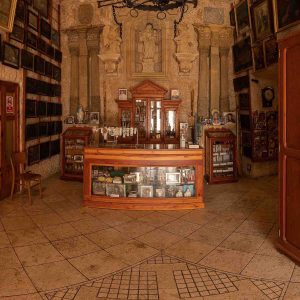
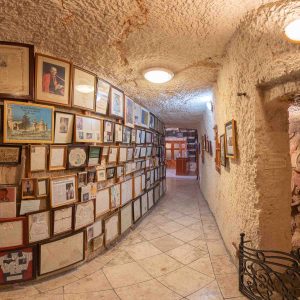
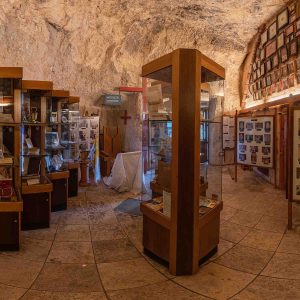
Located in the village of Mellieħa, the Shrine of Our Lady of Mellieħa is the oldest Marian shrine in Malta. It is a Roman Catholic church built on the site of a cave traditionally associated with the founding of Christianity in Malta.
The present building was constructed between the 16th and 18th centuries and contains part of the natural cave where the church was built. It has been visited by several personalities over the centuries, including kings and viceroys of Sicily, some great hospitallers, as well as Pope John Paul II. Mentioned in a document of 1436 by Bishop Senatore de Mello, it is recognized as one of the first parish churches in Malta.
According to tradition, the cave was originally a place of worship, but it became a Christian site after the shipwreck of Saint Paul in Malta in 60 AD. Saint Luke, who accompanied Saint Paul, is said to have painted a fresco depicting the Virgin Mary on the cave.
Since the 16th century, the church ceased to be an independent parish because it was absorbed into the parish of Naxxar. During the great siege of Malta, the church is said to have been visited by Don García de Toledo, the leader of the relief force that ended the siege.
In July 1614, the church was ransacked during an Ottoman attack, and the main fresco and some statues were damaged. Grand Master Alof de Wignacourt is said to have visited the church regularly after the attack, and devotion to the shrine subsequently increased.
The church was enlarged by a Sicilian wine merchant in 1644, and again enlarged and embellished in 1747. After recovering from an illness, Grand Master Ramón Perellós is also said to have visited the shrine.
Mellieħa was re-established as a parish in 1844, and a new parish church dedicated to the Nativity of Mary was built in the late 19th century. A pilgrimage to the shrine was made during a cholera epidemic in 1888, and another national pilgrimage was organized in 1949.During his visit to Malta, Pope John Paul II visited the shrine and blessed it in 1990.